
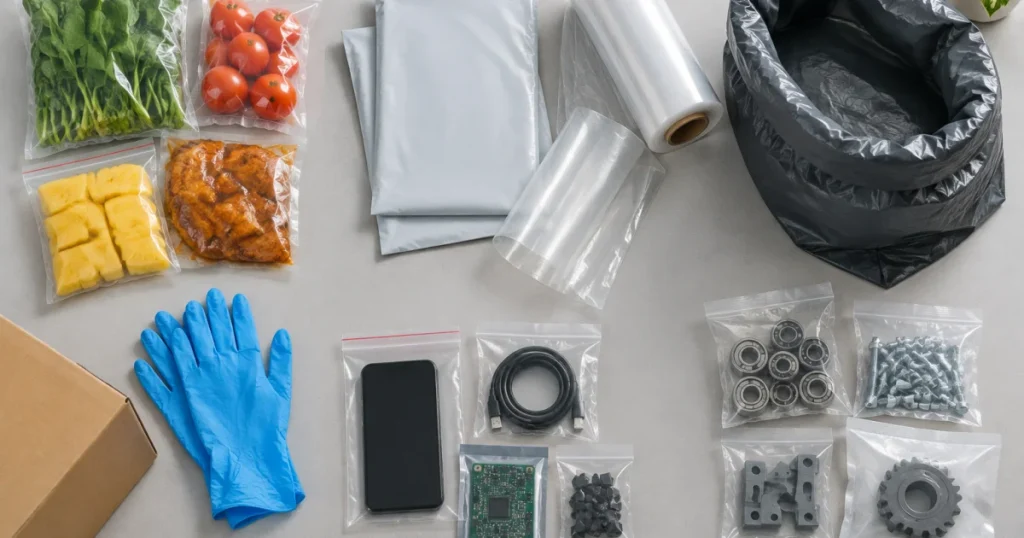
Buying plastic packaging sounds simple—until you need one spec that works for food hygiene, another that protects sensitive electronics, and a third that survives rough industrial handling. In Penang, many procurement teams also need packaging that is easy to replenish quickly, consistent across shifts, and compatible with existing carton sizes and packing methods.
This tutorial gives you a practical selection flow you can reuse. It’s designed for people who need to make a purchase decision (or write a clear RFQ) for Plastic Packaging Penang—covering common formats like polybags, liners, shrink film, stretch film, and protective bags for components.
Step 1: Map your use case (product + process) before choosing material
Start with a short “packing reality” description. Most packaging problems happen because the bag or film was selected based on appearance instead of how it will be used.
1A. Write down what the packaging must protect against
- Contamination: dust, moisture, oil mist, handling contact (typical for food and some electronics).
- Damage: abrasion, puncture, corners/edges, heavy stacking, forklift movement (industrial parts and hardware).
- Movement: shifting during transport, vibration, drops (all categories—especially when palletised).
- Static risk: ESD-sensitive parts, PCBs, connectors (electronics manufacturing and assembly).
- Leakage: powders, small components, liquids, or greasy parts (industrial maintenance items, chemical-related items where applicable).
1B. Record the packing process constraints
Procurement teams in factories and warehouses often overlook these process details, but they determine which packaging type is practical:
- Sealing method: open-top, cable tie, tape, heat seal, shrink tunnel, or hand shrink gun.
- Packing speed: manual packing vs semi-automatic line; faster lines favour consistent bag opening and film performance.
- Storage conditions: hot areas, direct sun at loading bays, cold rooms, or humid storerooms.
- Handling path: hand-carry, tote/box, pallet, racking, long-distance courier, or in-plant transfers.
Once you capture the product risks and process constraints, you can choose material and format logically instead of trial-and-error.
Step 2: Choose the packaging format (bag, liner, stretch, shrink) by job-to-be-done
In many Penang operations, you’ll use more than one layer: an inner bag for cleanliness/protection and an outer film for stabilising cartons on pallets. Use the format that matches the job.
| Packaging type | Best for | Key strengths | Common watch-outs |
|---|---|---|---|
| Clear polybag (flat bag) | General parts, food ingredients (secondary pack), components | Simple, low cost, easy visual check | May tear with sharp edges; needs correct thickness |
| Zip bag / resealable bag | Small parts, kitting, samples, rework items | Fast open/close; reduces tape usage | Not ideal for heavy loads; zip quality varies |
| Heavy-duty liner bag | Carton liners, drum liners, bin liners, bulk items | Puncture resistance; protects outer carton/bin | Oversizing creates excess folds that trap debris or moisture |
| Shrink film / shrink sleeve | Bundling multipacks, tamper-evident outer wrap, neat cartons | Tight finish; reduces shifting | Needs heat source and consistent film gauge; can warp thin packs |
| Stretch film (hand or machine) | Pallet wrapping for transport and warehouse stability | Fast unitisation; improves load containment | Wrong film stretch causes breaks or loose pallets; training needed |
| Protective component bag (e.g., ESD-safe types where needed) | Electronics parts sensitive to static or surface marks | Reduces handling damage; can be matched to ESD controls | Must align with your ESD program; don’t assume all “anti-static” is the same |
Practical tip: If you’re frequently re-kitting or returning items to stock, choose a format that can be opened and re-closed without destroying the bag (for example, a resealable bag for small parts or a liner with a tie method).
Step 3: Specify material and performance: thickness, strength, clarity, and barrier
Once the format is chosen, the next decision is performance. Many buyer-supplier misunderstandings come from vague requests like “make it thicker” without defining the failure mode (tear, puncture, or seal break).
3A. Start with the failure mode
- Tearing during handling: often linked to insufficient thickness or poor toughness for the application.
- Puncture from sharp corners: consider heavier-duty film and better fit (less slack), plus corner protection where necessary.
- Seal opens: check sealing method compatibility; heat seal requires the right film structure and operator settings.
- Cloudy appearance: if visual inspection matters, request clearer film; don’t sacrifice needed strength for clarity.
- Moisture issues: improve sealing and fit; also review storage/condensation causes rather than only changing film.
3B. Write a simple spec that a supplier can quote correctly
Use a one-page RFQ checklist. Even if you don’t know exact technical standards, you can specify the parameters that prevent wrong deliveries:
- Dimensions: width × length (and gusset if needed). Provide internal vs external size if the bag must fit a tray/bin.
- Thickness: state required thickness range and what it’s based on (handling, weight, puncture risk).
- Type: flat bag, gusset bag, liner, roll stock, shrink, stretch, resealable, etc.
- Pack form: loose packed, in bundles, on rolls, perforated, wicketed (if used in faster packing).
- Operating method: heat seal / tape / tie / shrink; include equipment details if relevant.
- Environment: food contact handling practices, clean area expectations, or ESD-controlled area needs (where applicable).
Step 4: Apply industry-specific checks (Food vs Electronics vs Industrial)
Here’s how to translate the same selection framework into three common Penang scenarios. The goal is not to overcomplicate your purchase, but to prevent expensive mistakes like using the wrong film in an E&E line or choosing a liner that slows down packing.
4A. Food: hygiene, odour, and clean handling
For food-related packing (ingredients, processed items, or secondary packaging), your biggest risks are contamination and inconsistency on the line. Choose packaging that is easy to handle and seal reliably.
- Prioritise clean storage and handling: even the best bag can fail hygiene expectations if stored open near dust or pests.
- Choose the right closure: heat seal is usually more secure than tape for inner bags, but it must match your workflow.
- Consider clarity: clear polybags support quick visual checks for correct items and foreign matter control.
- Right-size the bag: too large creates excess folds; folds can trap residue and complicate sealing.
If you are lining bins or cartons for food operations, heavy-duty liners can reduce carton contamination and make changeovers faster.
4B. Electronics (E&E): surface protection and static control alignment
Electronics packaging is often selected to prevent scratches, dust, and moisture exposure—plus manage static risk depending on the sensitivity of your components.
- Match packaging to your ESD program: if your process requires ESD-safe packaging, specify it clearly and use it consistently in the controlled area.
- Prevent cosmetic defects: pick film that won’t scuff easily if the item is frequently handled or stacked.
- Support kitting and traceability: resealable bags work well for small parts and reduce re-packing waste.
- Avoid “one bag for everything”: small connectors and sharp-pin items may need a tougher bag than flat components.
4C. Industrial parts: puncture resistance, load stability, and rough handling
Industrial packaging usually fails at corners, edges, and during transport. Prioritise toughness and pallet stability over appearance.
- Use liners to protect outer cartons or bins: this is especially useful if parts are oily, dusty, or heavy.
- Specify by weight and edge risk: a small heavy metal part can puncture thin film; describe the product to your supplier.
- Unitise pallets correctly: choose stretch film suited to your wrapping method (hand vs machine) and train operators to avoid loose wraps.
- Combine packaging with handling products: where applicable, using the right containers can reduce film usage and damage.
If your operation uses reusable bins or stackable totes for in-plant movement, you may also want to standardise with suitable industrial containers so the bag/liner size stays consistent.
Step 5: Validate with a quick trial: what to test in 30–60 minutes
Before committing to bulk purchase, run a simple trial that simulates real handling. You don’t need complex lab testing to catch common failures.
- Fit test: pack the product as usual. Confirm the bag closes easily without excessive folds and doesn’t need extra tape “just to make it work.”
- Handling test: have two different operators pack 10–20 units. If one struggles, your spec may be too tight or the format is wrong.
- Edge/puncture check: shake and stack packed units the way they’ll be moved. Look for whitening, stretching, or pinholes at corners.
- Seal integrity: for heat seals, do a gentle pull test and confirm your sealing settings are stable across a short run.
- Pallet stability: wrap a small pallet (or a simulated stack). Check for film breaks, load shifting, and whether wrap tension is consistent.
Document the result with photos and short notes. This makes it easier to reorder the exact same spec later—or explain improvements to management.
Conclusion: a simple way to buy the right packaging (and avoid rework)
To choose the right plastic packaging in Penang, start with the job the packaging must do (protect from contamination, static, puncture, or movement), then select the correct format (bag, liner, shrink, stretch) before you lock in performance details like thickness, sealing method, and fit. Finally, validate with a short real-process trial instead of guessing.
If you want faster sourcing and fewer wrong deliveries, the best next step is to send a clear RFQ checklist—dimensions, thickness range, format, closure method, and your industry context (food, E&E, or industrial). That gives suppliers enough detail to recommend a suitable option without over-specifying.
Frequently Asked Questions
What details should I include when requesting a quotation for plastic packaging in Penang?
Include bag/film type (polybags, liners, stretch or shrink), dimensions (W × L and gusset), thickness range, pack form (loose or roll), sealing method, and your handling conditions. Also mention the product’s weight, sharp edges, cleanliness needs, and whether it’s for food, electronics, or industrial parts so the supplier can match the right material and performance.
How do I choose packaging for electronics without overpaying for unnecessary features?
Start with the actual risk: cosmetic scratches, dust/moisture exposure, or static sensitivity. Use protective bags that match your process (for example, resealable bags for kitting). Only specify ESD-related packaging when it aligns with your ESD control requirements and the parts you handle; otherwise, prioritise correct sizing and toughness to prevent punctures and rework.
Is thicker plastic always better for industrial parts packaging?
Not always. Thickness helps, but many failures are caused by poor fit, sharp corners, or the wrong closure method. A correctly sized heavy-duty liner can outperform an oversized thick bag that folds and tears at stress points. Do a short handling and puncture trial using real parts before committing to a bulk order.
Should I use stretch film or shrink film for pallet or carton wrapping?
Use stretch film mainly for pallet unitisation and load containment during transport and warehousing. Use shrink film when you need a tighter, neater wrap around a product or carton bundle and you have a suitable heat process. If you don’t have consistent heat application or the products are heat-sensitive, stretch wrapping is often the simpler choice.
How can I run a quick in-house test before ordering large quantities?
Test fit and closure first, then pack a small batch with different operators to see if the process is smooth. Simulate handling by stacking, moving, and lightly shaking packed units to spot punctures or seal failures. For pallet loads, wrap a trial stack and check for film breaks, loose wrapping, and shifting. Record results and use them as your purchase specification.
Need help specifying plastic packaging for your Penang operation?
Dai Ichi Supply Sdn Bhd supplies plastic packaging and bags for food handling, electronics packing, and industrial use. Share your product type, dimensions, packing method, and handling conditions, and our team can recommend suitable options—so you can order with clearer specs and fewer packing issues.