
Introduction
When businesses think about pallets, they usually focus on the upfront price. Wooden pallets have long been the most popular option because they seem cheaper compared to plastic or metal. But what many companies fail to consider are the hidden costs that come with wooden pallets, these costs that affect not just finances, but also efficiency, safety, and long-term sustainability.
In this blog, we’ll uncover the real drawbacks of wooden pallets and why more businesses are shifting to alternatives like plastic pallets.
Commonly Overlooked Costs of Wooden Pallets
Maintenance and Repairs
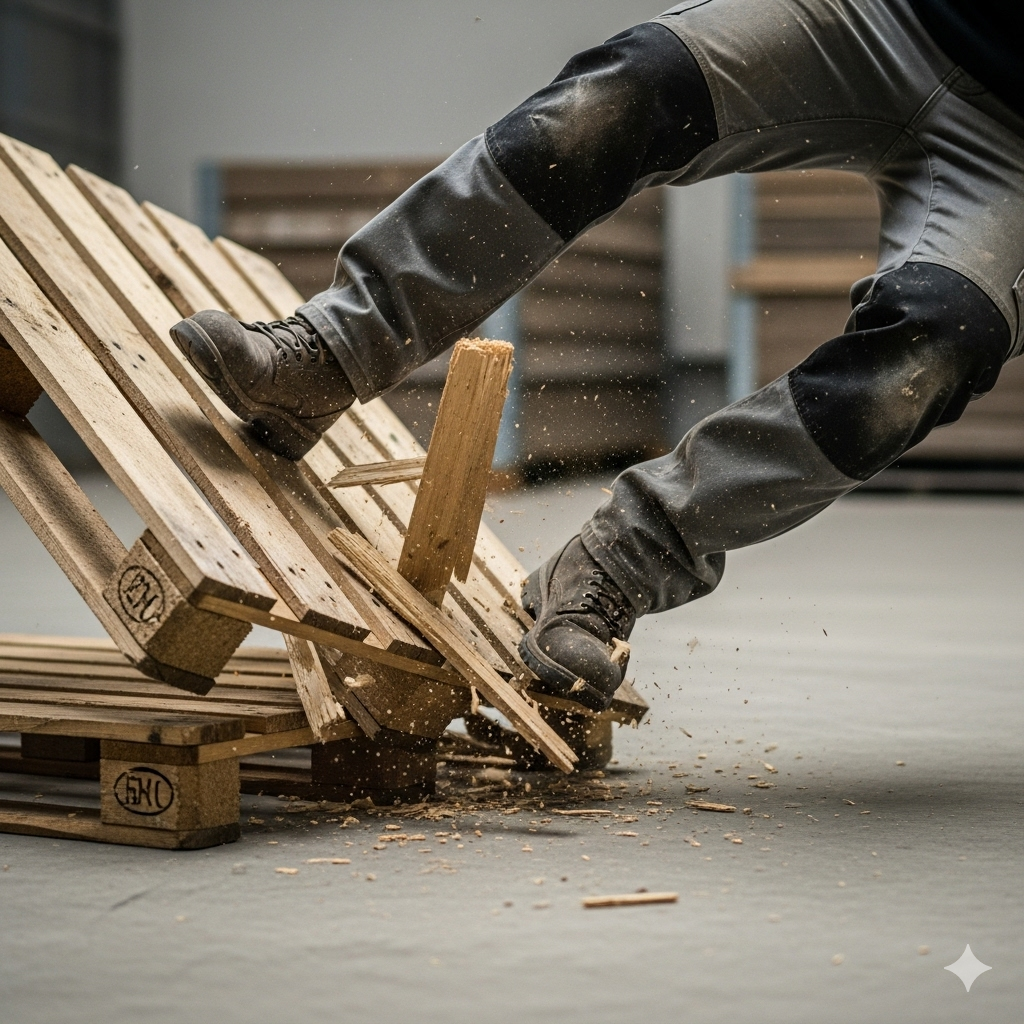
- Wooden pallets easily break, splinter, or crack after a few uses.
- Companies spend more on constant replacements or repairs, increasing operational costs.
Safety Issues
- Broken wood and protruding nails can injure workers, leading to medical costs or insurance claims.
- Damaged pallets may also cause accidents like dropped goods.
Inconsistent Quality
- Wooden pallets are made from natural material, meaning no two are exactly the same.
- Uneven weight capacity or warped surfaces affect load stability during transport.
Contamination Risks
- Wood absorbs moisture, leading to mold, bacteria, or pest infestations
- This is a serious concern for industries like food, pharmaceuticals, or electronics.
Regulatory Compliance
- Wooden pallets often require heat treatment or fumigation to comply with international shipping standards (ISPM-15).
- This adds time and cost to logistics.
Shorter Lifespan
- On average, a wooden pallet lasts only 10–15 trips, while plastic pallets can last up to 250 trips.
- Replacement frequency adds up in the long run.
Cost Comparison: Wooden vs Plastic Pallets
| Factor | Wooden Pallet | Plastic Pallet |
|---|---|---|
| Average Lifespan | 10–15 uses | 200–250 uses |
| Maintenance | Frequent repair/replacement | Minimal |
| Hygiene | Absorbs moisture, pests | Washable, non-porous |
| Compliance | Heat treatment needed | ISPM-15 exempt |
| Worker Safety | Nails, splinters | Smooth surface, safer |
Conclusion
While wooden pallets may seem like the cheaper option, the hidden costs make them more expensive in the long run. Businesses that switch to plastic pallets save on repairs, replacements, compliance costs, and even workplace safety issues.
Investing in durable solutions like Daiichi plastic pallets isn’t just about cost savings — it’s about efficiency, safety, and long-term growth.